FOLLOW HER FORWARD,
THE INNOCENT HARE

Mysterious and alluring, images of hares are all over the high street nowadays. For good reason, says JOHN BILLINGSLEY as he reflects on the animal's many magical and mythological associations and his own daimonic 'thought-hare'...
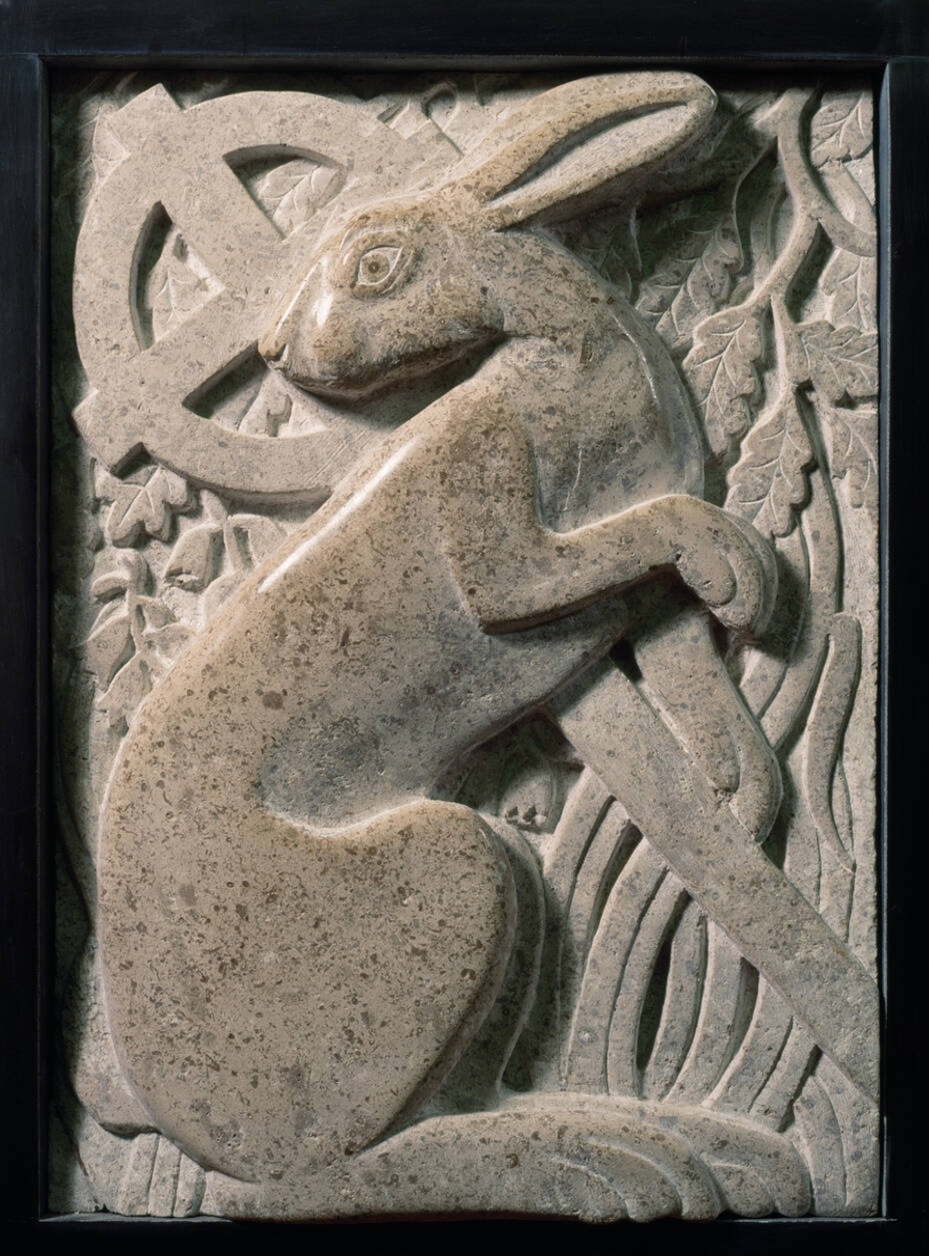
It was the edge of a scrubby wood in Suffolk, sometime when i was at university - 1972 or 1973. I was having a picnic with friends, and we were playing frisbee, a red one, and I was running across the lumpy grassy terrain to where it had dropped. As I reached the frisbee, the heel of my right boot hit the ground as I stooped down to scoop it up - and I stopped abruptly, the toe of my boot still raised. My foot was resting - lightly, but restrainingly - on the side of a hare resting in the grass. And it was looking at me, and I was looking at it; our eyes locked, and I gently raised my foot. The hare bounced off into the scrub.
I still see it, under my boot. I still see its eye, looking at me. I still see it bouncing off. I still remember the sense of a special moment, the gladness that I had landed on my heel softly, that I had reacted quickly, that we had seen each other.
The poet Ted Hughes recalled from his childhood in Mexborough, South Yorkshire, climbing up an earth bank, and when cresting the top, coming face to face with with a fox, inches away. Their eyes locked. Though this was not his first encounter with a fox, it was perhaps the point when their closeness was established, through a physical demonstration of a metaphysical association. The fox became for Hughes an animal of particular significance in his spiritual, magical life.
"AND YOU RUN FOR COVER, RUN FOR COVER LIKE A FRIGHTENED HARE"

For years, I saw few hares before and after I moved to Mytholmroyd in West Yorkshire, but whenever I caught sight of one it took on the nature of a fleeting vision. If I saw one, it was usually on Midgley Moor, on which I spent much time exploring and searching out, often successfully, unknown as well as known archæological sites.
Over time, I began to fancy a connection - if I followed a hare as it ran, I was more likely to find something interesting. Coincidence, maybe, but it did not feel like it. The hare, like Hughes's fox, became a personal daimon, or one of the many shapes in which it appeared. Seiing a hare came to signify a message, an affirmation from the other - from some other - world, that I was on the right track - as long as I took notice.
FIRST, CATCH YOUR HARE...
If you take notice, it may even tell you you're on the wrong track; that's what Boudicca was hoping for when, according to Cassius Dio,¹ she brought a hare to the gathering at which the Iceni and their allies were to decide whether to wage war against the Romans. After putting the case for war, she released the hare from the folds of her cloak, watched which way it ran, and deducted it ran in an auspicious direction. The rebels went on to take Colchester, London and St Albans, three major Roman cities; but perhaps she lost sight of the hare amongst the bloodshed and the day-to-day drudgery of keeping troops occupied. First, catch your hare...
For sometimes, work and daily life take your mind off maintaining that link with other ways of seeing, no matter how you value it; and often I have been unsure if I was still in contact with that other world of experience. That's where hares have again come to my aid, with affirmations less fleeting.
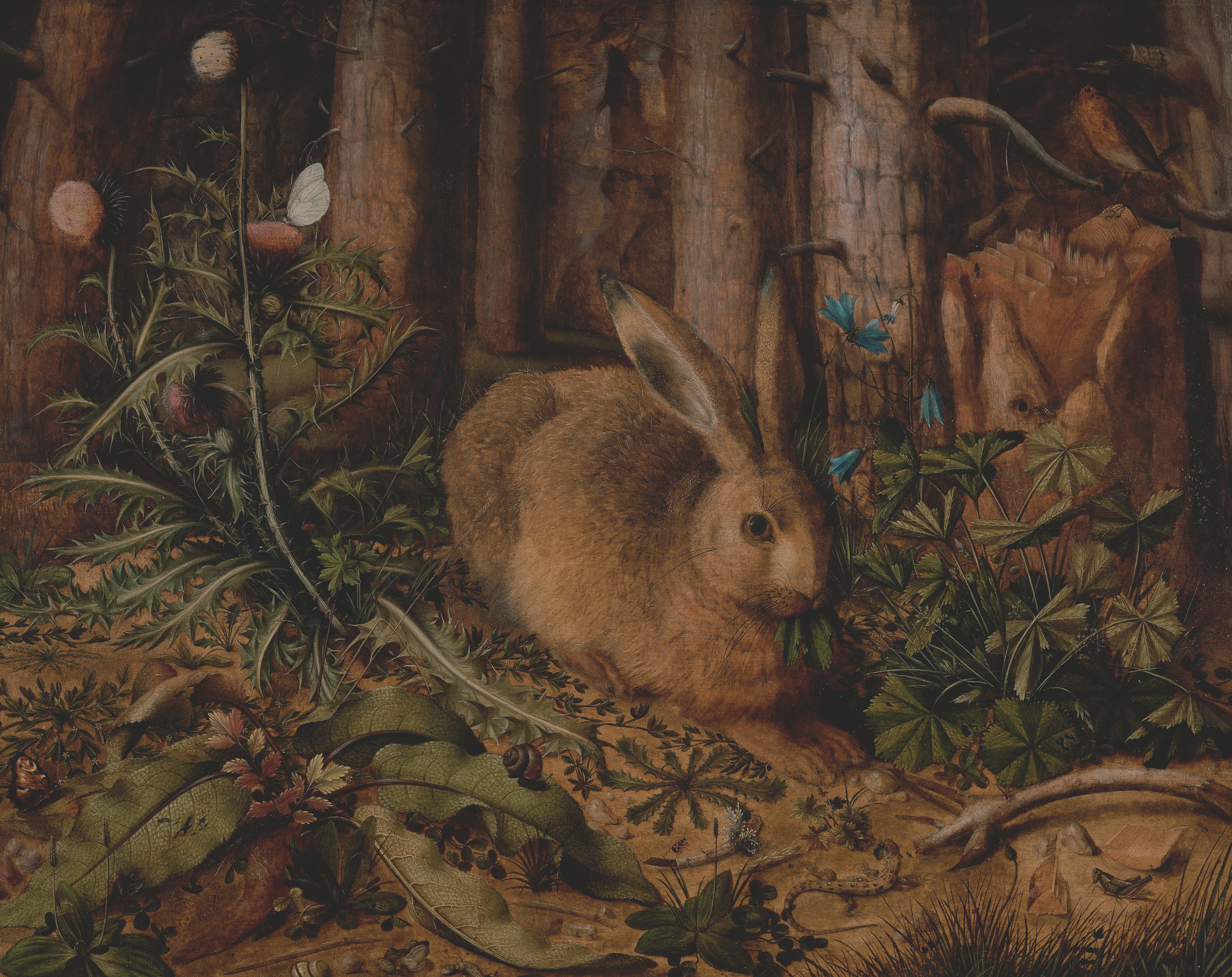
Late in the evening of 10 February 2006, I was driving along a road that skirts the lower edge of Midgley Moor, when I saw a hare sitting in the middle of the road. I slowed down, but I should have slowed down more, and stopped earlier. I was expecting it to run, but it just behaved like a shocked rabbit, which was a disappointment. I stopped right by it, as it finally scampered away into the bank, and breathed a sigh of releif - there had been a moment when I thought it was going to run under my wheels. Just as I stopped and it ran off, the Sandy Denny song I was playing in the car reached the line "And run for cover, run for cover like a frightened hare". And it glanced back at me as it hopped into the bank beside the road.
The next day, unable to shake the coincidence, I went into reflection, seeking a daimonic dialogue, a meaning I could take away from the encounter. And what came to me was to take note of things as they happen, not afterwards, and to be aware that magic is active in the here and now and requires cognisance and attention when it happens; in short, be awake, for there is another world alongside us at all times!
And I still recall its silhouette on the road before me, the abrupt brake as it suddenly turned round and looked set to run under the wheels, and the way it loped off, not panicked. And I recall the sense of a special moment, the gladness that I had reacted quickly, that something meaningful had somehow occurred, and that a hare played a vital role.
Nonetheless, we still need reminders. On 25 May 2012, I was driving up a slope on a lane near Rudston, East Yorkshire, when I was taken aback by seeing a small figure, about 3ft (90cm) tall, standing at the side of the road on the brow ahead. It seemed to have a hat on, and its arms were held in front of it, as if it were waiting for me to pass before crossing the road.
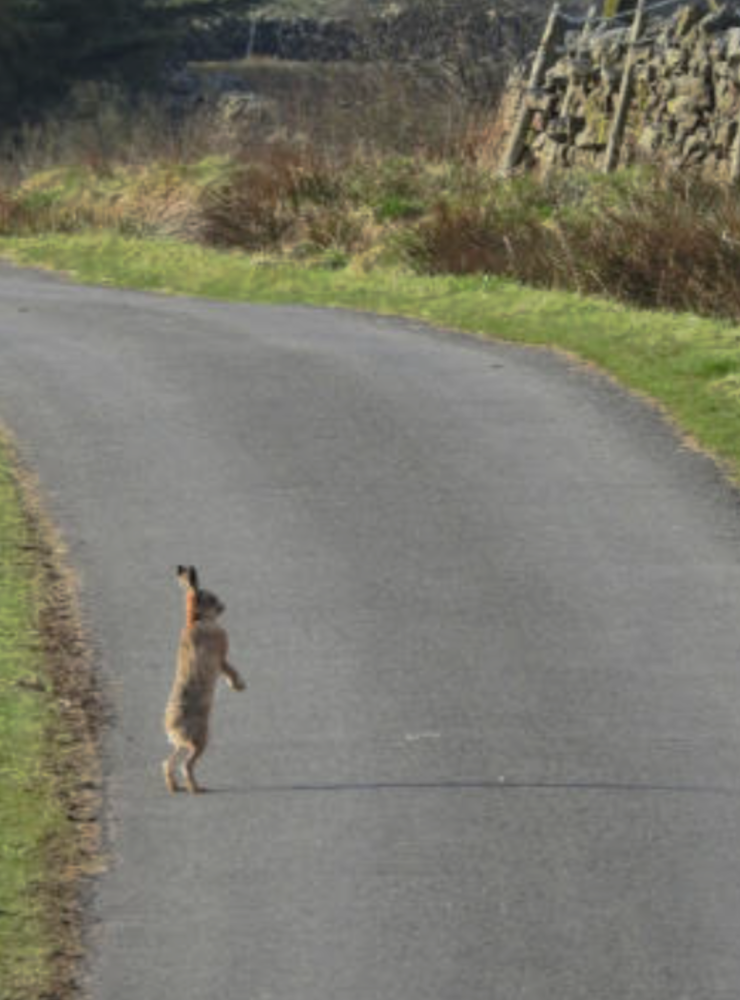
As I drove closer, it did start to cross the road, stepping out very deliberately on two legs towards the other side. But at some point, it became a thing loping on four legs - a hare. I had learned one lesson at least in 2006 - I kept slow, and as I got level with the hare, it was on the opposite verge, and like the previous time, turned and looked me straight in the eye, quite unruffled. Our eyes locked, and again something passed between us. And I have often wondered about the way the hare took shape from the little two legged figure I'd seen on the side of the road.
And yes, I can still see the figure, and the hare it became, and the way it looked at me; and I still remember the sense of a special moment, an experience not to be forgotten, and above all, not to be dismissed.
Hares have something to tell us, if we let them - that's my conclusion. A driver in Northumberland, Michael Ingham, came across a hare in the road on a run between Glanton and Whittingham in February 2005. He slowed down, but the hare stood its ground, watching as he approached. Michael stopped, and got out of the car - it'll run away now, he thought; but the hare just stared at him and then started to step towards him. Did it have something to tell Michael, or was something else going on? Either way, Mr Ingham didn't wait to find out - he jumped back in his care and drove off, unnerved.²
What would I have done? I like to think I would have squatted down and waited to see if the hare had anything to tell me. There's a story once told by John Gately of Co. Roscommon in Ireland of a man about to shoot a hare, when it spoke and said: "Now you wouldn't be shooting your old grandfather, would you?" The hare is a creature that doesn't have to wait till Christmas Eve or New Year's Eve to talk. If we listen.
HERE, PUSS
Now I started writing this piece on 4 July 2014, recalling experiences and searching my diaries, looking through books on my shelves, and wondering what I was doing with it. Who would ever read it? Was there any point in this linking of memorates with folklore and innuendo? Then, on 9 July, I was walking near Walshaw - a placename, note, that denotes "the wood of the Britons", Boudicca's people - when I saw two cock pheasants squabbling. I took a photo, and carried on. When I got home, I downloaded the photos I'd taken, and right at the bottom of the picture of the pheasants, there was a resting hare, which I'd completely missed in my focus on the birds. Once again, the hare was telling me something. I still didn't know what I'd do with this essay, but I knew I should do it.
The pet name for a hare in country talk is 'puss'. Just like a cat, and just like a cat they come with an association with witchery, with luck. Some people believe that if a black cat should cross your path, it's a blessing; others believe it's bad luck. When I was a child I heard the former, and it's the story you first hear that sticks with you. When a black cat crosses my path, my mood brightens. And so it does if the other puss crosses my path (though growing up in London W3 in the 1950s there wasn't much call for hare folklore). But I seem out of step with English folklore. Almost everywhere that someone has thought to write it down, it's a bad sign to meet with a hare on the road. And the company who built Hare Mill in Todmorden in 1909, put an image of the hare running down the chimney, should have consulted local opinion first; the prognosis that as hares cannot run down a steep slope, the mill would have no luck was bore out when the mill was sold (and promptly renamed) five years later.³
But I take some heart from the people of Condover in Shropshire, who were obviously aware of the niceties of detail in the magical realm. Georgina Jackson in the latter half of the 19ᵗʰ century heard there something that may even have been in Boudicca's mind: "It is lucky to meet a hare, but unlucky to see it run across the path. Should it cross the path of a wayfarer from right to left, his journey will be disastrous; if it scuds along the way before him, the issue of his affairs will be doubtful for some time; but if it crosses from left to right it is a lucky token."⁴ Well, on both my earlier road encounters the hare crossed from left to right, so thank you Condover. And when I was driving in a blizzard in North Yorkshire in 2018 and wondering anxiously whether I would make it the last 40 miles(64km) home, a hare ran across the road in front of me, left to right; and a few hours later I pulled up outside my home.
I thought I had never come across a similar directionality with folklore about cats, but then I found that a 12-year-old boy in Manchester in 1952 announced that if a black cat crosses in front of your car from left to right, it's not so good - you will have a puncture - while another source also warned against the left-to-right progress, not just for drivers. But if you're British, you're more than likely (than in North America, say) to believe that meeting a black cat is licky, especially if you greet and stroke it - but you can easily find someone who will disagree with you.⁵ Because it could just be a witch's familiar doing the witch's business, or the witch themselves in a feline shape; so here the cat puss meets the hare puss again. The witch had various choices in shapeshifting, but cats and hares and crows were the favoured ones, as the Scots wisewoman Isobel Gowdie confessed in 1662:
I shall go into a hare
With sorrow, and sych, and mickle care...
I shall go into a cat
With sorrow, and sych, and a black shot...
I shall go into a craw
With sorrow, and sych, and a black thraw...
With sych meaning 'sigh', care having a meaning closer to 'mental suffering', black shot meaning 'sudden pain' and black thraw signifying a convulsion, the transformation evidently wasn't pleasurable, but once the job was done you could share the idiosyncracies, the perspective and the apparent nous of the beast, because these were the creatures who best expressed the witch's quest.
WHILE YOUR BODY RESTED COMATOSE, YOU COULD GET HUNTED OR SHOT
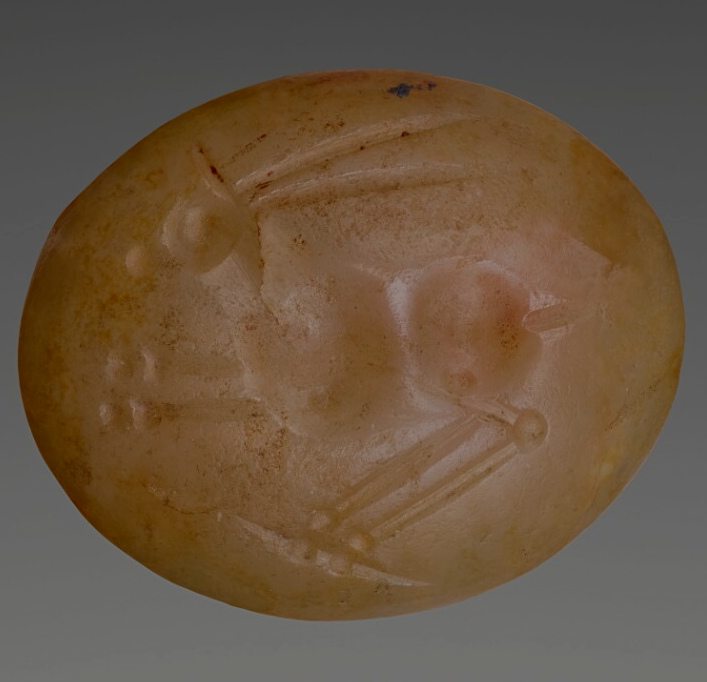
There was undoubted risk in shapeshifting - while your body rested comatose, you could get shot, or you could get hunted, or your body might be found, like that of the repuded wizard Johnny o'th'Pasture as it lay in a field in Cliviger, its mouth wide open, looking for all the world like a corpse to men who came across it. And as they pondered the right thing to do, they told later, they noticed a "black rabbit" running around the field, changing direction suddenly, sometimes darting their way, and then away again. Curious behavious and not a rabbit's - but young, small, hares may be mistaken for a rabbit in appearance, and young hares are reluctant to leave the field they're set in. As a Norfolk countryman recalled: "The young hares, when they were quite the size of a rabbit, we would chase them on a field and they wouldn't leave that field. They keep going round and round..."⁶ So this Cliviger animal ran about, till at last it made a bee-line for Johnny, made a spring and straight into Johnny's open mouth! Perhaps it was with sorrow and sighs and suffering that Johnny came back to himself, as when he did, he berated the men for disturbing him.⁷
ANIMAL MAGIC
In Britain, aside from cats, two animals have a particular affinity with ancient magic and mythology - the horse and the hare. Both are eaten, but traditionally not without some caveats - as if a taboo existed (cats are not eaten by humans at all here except in extreme hunger and in cases of deception). George Ewart Evans in The Pattern under the Plough argued that the horse has a sacred history in these islands, such that it could be eaten only on certain prescribed occasions - and that the modern British distaste for eating horse, so disdained by secular rationalist carnivores in the horsemeat scandal five or six years ago, derives from this history. Evans and David Thompson, in The Leaping Hare, suggests a similar case for the hare, which traditionally is not a popular food among those closest to the land, and in Ireland, particularly in Leitrim, the taboo goes along with an association of hares with witches - which may just mean that if you kill (and eat) a hare, you may be killing (and eating) one of your neighbours...
Perhaps it's not a case of a taboo, in the sense of the Hindu taboo on slaughtering and consuming cattle. Perhaps it's more a case of symbolic potency, which bot horse and hare possess in great measure. However modern secular and rationalist society, in its materialist fascination with things as things, has lost much of its simbolic language, and in losing it has learned to dismiss the rest. Here in the West, customary Christianity, particularly the Protestant varieties, is declining - but where might it be if it still celebrated more or less obscure symbolism? To argue, for instance, that there is no difference between eating horse meat or beef, as Princess Anne (who would surely be a far less august personage without a syntax of symbolism in the UK) and many others have done, relegates the horse to a mere object of human consumption, with no more respect than the perfunctionary "those who are about to consume you salute you" ethos of the modern human slaughterhouse. Do that to a hare, and you are left with a rabbit. Sorry, rabbits, but that's the way it is. Save for your unthinking lustiness, you cause little offence.
Take the Chinese and Japanese views of the Moon. Where we in the West see the Man in the Moon, they see a long eared mammal standing up (a bit like what I saw on that road in Rudston, actually), working with a deep mortar; the Chinese say it is a hare pounding the Jade Elixir of Life, the Japanese (and Koreans) say it is a rabit making o-mochi, rice cakes. But then, the Japanese for hare is nousagi - rabbit prefixed with 'wild field'. For some, the hare is just a rabbit with pretensions.
The hare is a lunar creature in the West, too - maybe that's why it's lucky to meet a hare not only crossing left to right, but also in the afternoon or evening (but not lucky in the morning);⁸ but then why is its lucky direction left to right, the direction of the Sun - does it then undo the mystery of its association with the Moon, and assume more angelic status in the light? Perhaps that's how St Melangell saw them - her hermitage in Pennant Melangell was by repute crowded with hares, who took to her like - well, like familiars to a witch, I suppose, but she protected them and became the patron saint of hares.
Perhaps St Melangell was a Christian avatar of Artemis, the hunter goddess who had a soft spot for gentle and young animals, especially the hare. Her sanctuary at Agrotera was characterised as a place where hare and deer grazed peacefully. So when I encountered a hare grazing in the grounds of Ardenica Monestery in Albania when I visited in 2015, it should have been no surprise to learn that it is built on the site of a temple to Artemis.
Artemis's hare could be a guide for the seeker. Paunanias, the 2ⁿᵈ-century Greek geographer, recounts the founding of the southern Greek city of Boiai by some of the followers of Trojan Aeneas as they fled to Italy after the war; having been told that Artemis would show them where to live, as soon as they set foot on land they saw a hare, and took it for her sign. Where it disappeared under a myrtle bush was where they built their new city.⁹ Perhaps when next I follow a hare to an achæological site on the local moor, I should say a prayer to Artemis.
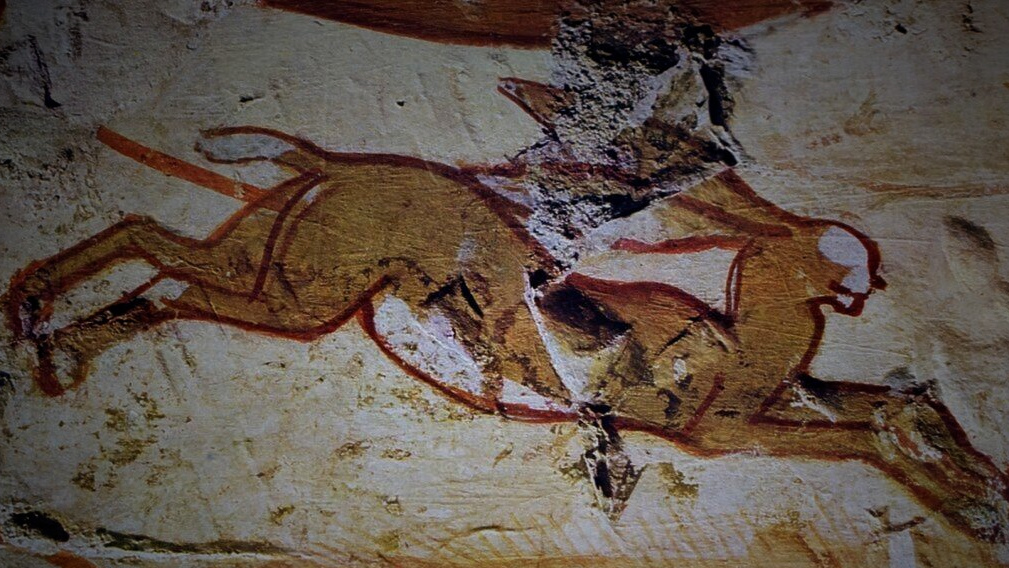
The curious, mysterious, magical, auguric character of the hare is not a modern invention - it goes back in century after century, resilient enough for documentary records of folklore still to get no nearer a sense of origin. The hare that appears scratched in palæolithic caves, the hare that busies itself on the Moon, the hare that appeals to the esoterically inclined, goes back millennia. The hare that has found a unique place in my own experience of the world is not a personal symbol, but an ancient one that has taken up residence in my own hermitage. And I am glad of it, and glad of every occasion it makes its presence known.
The hare, the fast-traveller, the way-beater, the scutter, the hedge-frisker, the starer with wide eyes, the cat that lurks in the broom, the springer, the light-foot, the low creeper, the sitter-still, the one who turns to the hills... fine day to you, Good Hare!¹⁰
NOTES
|
1 Casius Dio, Roman History, 62:6, available at: https://penelope.uchicago.edu/Thayer/E/Roman/Texts/Cassius_Dio/62*.html#1 2 Michael J Hallowell, Northumberland: Stories of the Supernatural, Countryside, 2012 pp71-72. 3 Barbara Rumsden?!. Her name is actually Barbara Rudman. I could not find a pdf of the book, but it does exist., Todmorden Old Pub Trail, George Kelsall, 1898, p47. 4 Iona Opeie & Moira Tatem (eds.), A Dictionary of Superstitions, OUP, 1993, pp190-191. 5 Opie & Tatem, 1993, p60; E & MA Radford, Encyclopedia of Superstition, Hutchinson, 1969, p86. |
✒ JOHN BILLINGSLEY, an unrepentant member of Hebden Bridge's 1970s 'hippie inlfux', now rambles on in talks and guided walks about various aspects of curious lore in his area. |